The Cure for a Boring VIX

The VIX has been pretty boring lately. That’s pretty easy to agree on. Which in turn means the S&P has been pretty boring. In this case, the S&P being boring means it keeps going up. Now I’m a very big fan of boring. I’ve told students, I’ve told clients, if steadily making money is boring, then every day you should strive for boring. Boring should be your investing and trading mission.

But for some reason we don’t like boring. It doesn’t feel as fun if the market just goes up. If you just make money every day, where’s the great story to tell. So unless you are one of the few who are happy making money in a boring way, we need to find another playground.

And like an early present for the holiday season, here come bitcoin index futures listed on the Chicago Mercantile Exchange. Yes a real, regulated, US fully legal trading instrument based on that “thing” that would only be used by criminals. Remember those days? Silk Road, Dark Web, or nerd. Those were the only places bitcoin belonged, or so it went. And now that it’s worth over $7,000, everyone wants to play, and now they can.

I find it a bit ironic that at the same time that the S&P 500 is boring, the exchange that introduced us to the world of index futures trading is launching what promises to be a contract that will be anything BUT boring. Bitcoin prices aren’t in the news on a regular basis because they’re boring. Bitcoin prices are up 10x in the last year. So these prices are up and not boring! We all want that right? Well, maybe…

Let’s look at the argument against excitement. The average 24 range of bitcoin over the last month is approximately $400.00. That’s significantly higher than what you’ll find on a boring index like the S&P. The chart below gives a good amount of information about what constitutes ‘exciting.’ The top chart is the basic chart of bitcoin prices over the last 12 months. The second chart is the average range of the daily price, from high to low, over the trailing 30 calendar days, which in the case of bitcoin is one month. Remember, that’s even more bang for your buck…you can live the excitement of bitcoin every day, not just Sunday night through Friday afternoon, like the S&P index. The third chart shows the same range as a percentage of the previous day’s close, with a reference line at 5%. It’s not an irregular day to have a range beyond 5%.
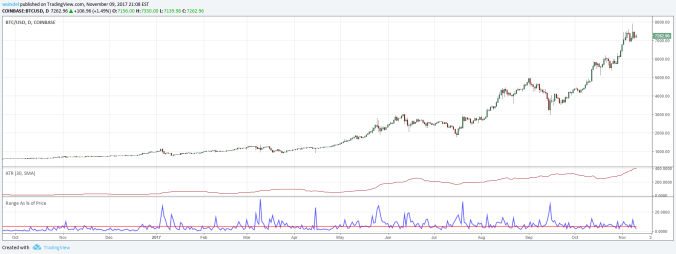
Bitcoin w ATR

We can look at the same three charts as they relate to the S&P 500. The charts pictured are the actively traded e-mini futures contract. The Average Range chart is using 21 days instead of the same 30 from the bitcoin chart as a month of trading the S&P is approximately 21 days. The bottom chart of daily range as percent of price has been altered such that the red line is set at 2% vs. the 5% line we had used for the bitcoin chart. And yet, we have trouble breaking it even on occasion, to say nothing of a regular basis.

ES w ATR

I understand as someone that uses charts on a daily basis that some of this does not always make itself apparent in understandable ways to those not looking at the continuous comparisons these pictures allow. And after all, I’m the first to admit charts themselves are Boring, so if we’re on the topic of excitement, I’m going about this all wrong.

Let’s look at this in money terms. The only thing that really matters when it comes to these discussions of profit and loss. There are no words in the statement “profit and loss” that have anything to do with something other than making (or losing) money. So let’s do our comparison in those terms. We can start with that mini S&P index, as it’s the most familiar price other than The Dow when discussing overall markets.

The average 21 day range in the e-mini is around 13.5 full points. In fact on November 8, the high was 2592.50 and the low was 2579.50, a range of 12.75 points, pretty close to the current average. The dollar value of a move in the e-mini contract is $50, so 13.5 point range works out to a swing of $675 on one futures contract. By comparison, the new CME bitcoin index “BTC” contract has a contract size of 5 bitcoin/contract. Therefore, a $1 move in bitcoin is marked by a $5 per contract change in your account value. So the current average daily range of $400 translates to a daily P&L equivalent of $2,000 per day. And that’s on average. And that’s more volatility than most stomachs can realistically handle. It’s the balance of Fear & Greed on a daily basis. And you can never underestimate the effects of the Fear side of it.

Still bored? That’s the point of this one. Boring can be good. If you need sleep you go for boring. Tired? Fireworks show or golf on television? I’m going with TV golf. Boring in that case, is good. Boring helps you sleep when you need it. Exciting usually means losing sleep. Now this can be good. Celebrations of any sort often fall into that category. But not every day. Weddings are fun parties. But I don’t want that excitement on a daily basis.

Well get ready, bitcoin is a party of a market every day. And now everyone’s got an invitation! Not everyone can handle all that excitement. Does it have its rewards? Of course! But what does it take to get there? That’s the part that becomes a personal assessment everyone should make before jumping in. These new futures give exposure that many have been looking for. But it’s just a first step. If looking to play these markets, get ready for the amount of fear you will experience; and when it’s in the right balance to your greed factor, that’s the time to step up to this table.

ETF’s, while often leveraged, rarely have the actual dollar swings per unit of ownership that futures do. And an ETF can’t be far behind these index futures. Though ETF’s have been rejected on prior occasions, exchanges are competitors, and like many competitors they get jealous. So don’t be surprised if an ETF on bitcoin or other cryptocurrency is approved soon to trade on an equity. Because for now, all the US regulated cryptocurrency trading will be in futures based off of a bitcoin index price. And that’s really exciting! But if you want to invest in these markets, and don’t crave your craziest college parties every single day, have a bit more patience. Your entry ticket won’t be far behind, and it might actually give you a much more tolerable balance of exciting and boring.
The More Things Change…

Black Monday 2

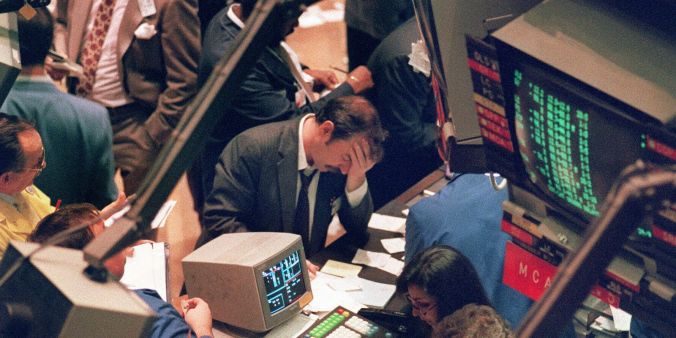
“I’ll always remember where I was when…” That’s the beginning to a sentence that is generally reserved for some pretty important occurrences. I don’t remember, I’m not old enough, but I think the first time I ever heard that sentence was people discussing President Kennedy getting shot. Man lands on the moon. Challenger space shuttle blows up. And this week? We’re all discussing (I don’t think reminiscing is quite the right word) where we were, what we were doing when the stock market crashed on “Black Monday.” We’re not just remembering where we were for an event, we’ve coined a name for an entire day around this one.

And it really is a pretty deserving day. The Dow was down 22.61%. That’s almost a quarter of its value! Today, October 19, 2017, the Dow Jones Industrial Average closed at 23,164 and change. To match Black Monday, the Dow would need to lose almost 5,100 points tomorrow. It wouldn’t be a Monday, but that’s not really the point. Imagine how lousy your weekend would be if it started Saturday with the Dow Jones Industrial Average at a little over 18,000. And when it happened on a Monday, people had to go back to work the next day!

I was not yet a full time trader, but I was close. It was just over a month later that I began trading futures in the Gold pit on the Commodity Exchange (COMEX). I sold all my stocks shortly before the crash in order to have liquid assets to begin my trading career. Many a trader has uttered the phrase, “Better lucky than smart.” I’m one of them. And so as a bit of a shock to my young, enthusiastic, and of course optimistic self, I watched the major index that people at the time used as a large measure of their worth, erase almost a quarter of its value. Yes, I remember where I was when…

But what does that have to do with today? Can’t happen again. After all, in percentage terms, that day was a 76% larger loser than the beginning of the even more famous Crash of 1929. It is easy to argue that one was actually worse, because though the Dow “only” lost 12.82% in a day back in 1929, it lost another 11.73% the next day. If it had happened in just one day? It would have been just over 23%. And this actually brings me to the point.

I watched and listened today as the anniversary was discussed. The overwhelming sentiment seemed to be it’s an “outlier,” a statical anomaly. After all, the next worst day wasn’t even close. Remember? Over 22% vs. under 12%. This is one of those occurrences that you just happened to be alive for…statistically speaking. Chances are actually that multiple generations in your family won’t see such a day. At least that’s what statistics tell us. Even Introduction to Statistics covers this much. In an earlier blog I brought up the supposed unlikelihood of a 6 sigma move, or 6 standard deviations from the mean. And I’ve brought up Black Swans. But Black Monday was a move of more than 20 Standard Deviations! I can’t even imagine how many decimal places that is.

On top of that enormity of the event, we’ve got all sorts of circuit breakers. What could happen? We’ve made it so much harder to melt down than melt up (Yes, “melt-ups” happen…do we need to go into bitcoin and ethereum again?). But we had mechanisms in place back then to insure that you wouldn’t lose 25% of your money in one day. In fact, that’s what it was called at the time, “Portfolio Insurance.” It was the idea of buying options as ‘insurance’ against a big move against you in the overall market. Didn’t help most people.

And it wasn’t all that long ago we had the “flash crash.” Also previously covered. And now we’ve put in place systems to, hopefully, stop that from happening again. Unfortunately to me, this sounds much like crime or computer viruses. We always play catch-up. Not intentionally. We’re naturally a step behind. Successful criminals exploit flaws in the legal system, or some other system, to act in ways that were never anticipated. That’s why they’re successful. They think in ways we previously hadn’t. Unfortunately, we’ve found this to be the playbook of terrorists as well.

And so it is in the markets. We react. Something happens and we plug the “hole.” Like the proverbial finger trying to stop a leak in the dike. Another one opens. Think back to the recent “Great Recession.” Those evil bankers invented products that were destined to fail and they did. However!…and this is important…it’s difficult to contend that what they did was illegal, outside of fiduciary duty anyway. What they did was their job, or at least as they perceived it. We can discuss the problem with that on a moral basis, but in the end, their job was to make money without breaking the law. And after they did, we made some new laws. Same thing a couple of years later. Flash crash. High frequency trading. Etcetera. A group exploits the system as it’s built, and then we change the system.

I don’t know what we’re going to blame the next time. Maybe it’s ETF’s. There’s a nice false sense of security. Or cryptocurrencies, once we’re all “lucky” enough to have easy access. Maybe a cryptocurrency ETF and then we can make 2 new sets of rules. But something will happen.

While I don’t mean to be repetitive, I do realize that the theme of this blog in ways is very similar some previous ones. But that is kind of the point. Certain things in markets need to be reinforced. Over and over and over again. Mistakes that you promise to only make once, until you make the same one again. If you’re lucky, the second time will be the last. More often, we do it at least once or twice more than that.

When I teach, the most important thing I ever ask anyone to learn is the importance of discipline. In my 10 rules of trading, Discipline ranks #1; and Remember Rule # 1 rounds out the list. And the discipline we need in trading and investing is to never get too comfortable. Because it’s not just those who forget history that are doomed to repeat it. In markets, there’s always another shock of some sort coming. And then we get to make new rules again. And so on…

I’ve Seen This Movie Before

Déjà vu: the strange feeling that in some way you have already experienced what is happening now [Cambridge Dictionary]. It’s the feeling I had when I read that London’s transport authority would not renew Uber’s license to operate in the city. Transport for London (TfL) gave reasonable justification for the decision, but I couldn’t help thinking that there was more behind it than this. And that’s why I had the déjà vu feeling. Because when situations like this arise, when a new business is stopped from changing an industry, there are always reasonable explanations…and then there are the conspiracy theories. Personally, I love a good conspiracy theory, so let’s explore this one…in the name of business and finance, of course.

When the decision was handed down, it was after Uber’s request for discussions with TfL had been turned down. It was in spite of the hundreds of thousands of signatures on petitions. It was in spite of the many cities that had not crumbled under the weight of irresponsible drivers once the firm settled in. So it would “appear” (here’s that conspiracy stuff starting…) that the TfL was not necessarily concerned with solving the problems, for in the eyes of the city government, Uber itself is the problem, not the specifics pointed to publicly.

There is of course reason for concern. The traditional taxi business will suffer with the addition of Uber to any city. And when we say ‘traditional’ we mean decades of relationships between owners, drivers, and government. And then the new kid comes to town, supposedly acting as a bully until there’s nothing left of the old guard. A bit dramatic? Probably. Entirely off base? I’m not so sure.

I’m from New York. We have a lot of taxis. And those taxis have always had to have a ‘medallion’ to operate within the city limits. The medallion is something like a liquor license. You need a liquor license to serve alcohol at a restaurant. Otherwise, it’s BYO – Bring Your Own. And the liquor license value is determined by demand. Demand that is fueled by people that enjoy being served a drink in a restaurant from the bar, not their own brown bag. So when times are good, liquor licenses go up in value.

A taxi medallion was similar in many ways. There is a limited amount. You had to have one to transport the general public. And New York city kept getting more crowded, and except for an occasional set back, has been doing steadily better financially since Jimmy Carter’s tour of the burned out South Bronx 4 decades ago. And the medallion prices went up, and up.

medallion prices 2004 to 2014

Over a million dollars in 2014. Currently, a New York City Taxi Medallion trades around $250,000. 75% discount; like a going out of business sale…hmmmmm. And with the price cratering, there is as always a reverberation. Like other businesses or investments in hard assets, an entire segment of the loan industry in New York centers around medallion loans. And as with the mortgage banks when real estate values tanked, the banks in the business of making loans for medallion purchases are feeling the pain too.

medallion defaults

When Uber hit New York, there were cries about the safety of riders and the safety of pedestrians. These cries were mostly from the taxi industry, for as any New Yorker will tell you, there wasn’t a great deal of confidence in passenger and pedestrian safety the way yellow taxis are driven in New York. And as for killing an industry, the newest incarnation has its own competition, Lyft. Lyft is growing, partially due to Uber’s own missteps, but also because that is capitalism. New ways are found to do things, an industry changes, and competition helps these changes create the newest mature version of that industry. Few politicians in New York are currently arguing that Uber and Lyft have ruined our quality of life and endangered our safety. But they’re saying things like this in London…

I do understand this fight. I have definitely seen this movie before. I was a commodity futures trader screaming and yelling in trading pits in what we believed to be the most efficient path to true price discovery. And then the machines came in to take over. Many claimed that there was no way a market could effectively trade only on computer. The computer didn’t ‘understand’ the markets the way a broker did. And there would be lots of technological problems that would doom investor confidence. But the only ones truly yelling that the future was bleak if trading was computer based were the people whose livelihood was in jeopardy. I took the opportunity to learn to develop trading systems. Pro-active is I’ve found, much more effective…or in more common terms, “the best defense is a good offense.”

Exchange members looked for ways to fight it. But this was evolution. This was progress. And in the end, progress always wins. And those who fight it the hardest rather than accept it and find a way to work within the new order are the ones that will indeed suffer the most. And their backers are often called out for standing in the way of actually improving our daily lives. The little things. An easier way to get a ride when you need it. From where you want to where you want. Get in the way of those advances as a politician or exchange governor, and you may find yourself the one paying the price.

Uber will drive again in London. And Lyft is now looking at London as a future destination as the firm seeks expansion outside the United States. Technology has streamlined the way we hire a ride. It didn’t end up hurting more people in New York and I don’t anticipate it will in London. Or in the next city that gets a service like Uber. It’s a better mousetrap. Better mousetraps should be encouraged. It’s been said that every act of creation is at the same time an act of destruction on some level. But like trading, as long as that risk/reward balance is favorable, progress will win every time. That’s why it’s called Progress.

Weather Report: Expansion

Irma Resize

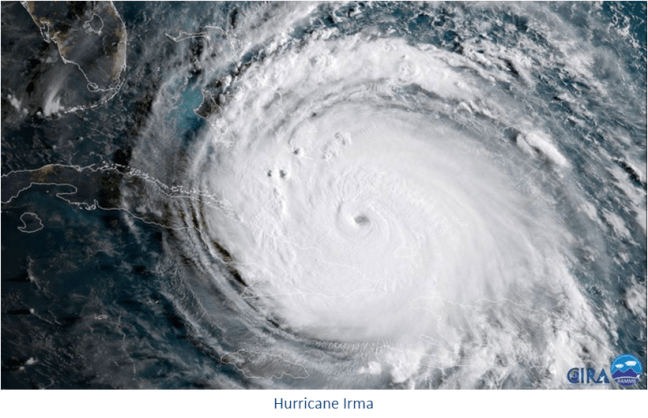
I was going to publish this blog last week. After all, in my last posting I said I wanted to get back to more regular releases. But as I was discussing the topic with an old friend with lots of wisdom I often draw on, I was advised that it was a bit too soon. So I waited. Long enough…at least as long as I could. I’m going to write about hurricanes…

This is not a topic that I’m taking lightly. I have friends and family who narrowly escaped major impact, and others that will be feeling it for years to come. I do understand that the last few weeks have wreaked havoc on large pieces of the country, and that disasters like these should be taken seriously not just with people you know, but as a whole. I hope that everyone reading in the US has found a way to contribute in the time since the storms struck, and that those outside the US do the same when their neighborhood or country endures something like this. This is when societies come together to help each other.  That is why we need and have societies in the first place. And societies drive markets, though I don’t think Thomas Hobbes and John Locke put it quite that way.

It’s well known that wartime is generally bullish for markets. Whether the cause is noble or not, the economy will generally reap a benefit in the form of invention, output, and employment. Wartime means more people in the armed services and less available for private employment. This of course leads to a growing economy as more people are employed, wages are pressured higher, spending expands, and with it the economy.

But what about hurricanes and other natural disasters. If ever there was a cliché that comes into play now, it’s that “Every cloud has a silver lining.” And seeing that silver lining will help us with our portfolios as well. Think about it. There’s a lot of rebuilding to do. A LOT. And while the unemployment rolls may increase, the increase is only temporary. People left their homes. Then they came back to a disaster area and needed to tend to their biggest concerns. Family ok? What can I salvage? Let me stop it from getting worse by emptying the house and cutting walls to prevent mold.

Then what? Rebuilding. And that takes money. So the government “finds” a few billion and then a few billion more and then a few billion more. Who is going to vote against that type of domestic aid? Private individuals like you and I contribute what we can. JJ Watt of the Houston Texans football team was able to raise over $37 million. The Hand In Hand concert raised over $44 million. That’s over $80 million and that’s just two efforts. Add the Red Cross, religious organizations, and the many other groups helping with financial donations and the numbers get pretty large, pretty quick.

Employment? Many people will claim benefits for a couple of weeks, but then will be employed again. Most large firms will bring back former employees to help rebuild, and of course keep them on still when business gets back to any sense of normalcy. The rebuilding effort itself will command a large workforce. Blue collar labor that is looking for work and willing to temporarily relocate won’t have any problem finding that gainful employment. The government programs that are set up for people to draw from for rebuilding can actually be used for rebuilding if people still have jobs to pay for food. This is what further expansion is all about.

Let’s look at retail. Home Depot received a hurricane alert 3 days before Harvey struck Texas. Immediately they dispatched “about 700 truckloads of supplies to its Texas stores in the path of the hurricane.” This was necessary as people prepared for the storm. But while Home Depot certainly worked hard with the idea that people’s lives would be somewhat less impacted with proper preparation such as boarding up windows, etc., the effort was not entirely altruistic. In fact, the title of the article was “How Home Depot Braced for (and Profited From) Harvey’s Impact.”

This was before the hurricane. And after? Building supplies…check. Appliances…check. Furniture…check. Clothes…well, you get it. These will all be bought to start all over. Cars? We lost one in “Super Storm” Sandy. I have told many people how impressed I was with the speed and ease with which my claim was handled. Approximately 250,000 cars were totaled in Sandy. I remember feeling lucky that I had a longstanding relationship with my dealer as many people couldn’t even find cars to buy.

BMW Resize

So let’s look at the private insurance part of the equation. Those will be some big checks. And those big checks are really just more money about to go into the economy. The insurance companies will whine, but after all, that’s what the insurance business is. Quietly make money for a long time and then pay some of it back out on occasion. Welcome to just such an occasion…or two in this case.

From Hurricane Harvey the current estimates are around 500,000 cars. From Irma up to another estimated 400,000 cars. So there is going to be a need to replace nearly 1,000,000 cars. One million cars. I wrote it both ways because I’m not sure which is more impressive. Either way, that’s a lot of cars! Unplanned replacements. Insurance money coming back into the economy. It is the insurance money that holds the key to part of the ‘thesis’ of expansion we’re discussing. For it’s that external money for replacement of lost property that negates the “Broken Window Fallacy.”

So out of this tragedy comes some good. The silver lining. For Home Depot and Lowe’s maybe even a gold lining. The people of Texas and Florida will rebuild. They have no choice. And we will all help. We have no choice. But as you pledge a donation, understand that as an investor you’re really just paying it forward. There is a great deal of profit potential for investors in these tragedies. There isn’t anything wrong with that. We invest unemotionally. At least successful investors do. The ones we admire most are those who know when it’s time to give some back…

There Goes the Neighborhood…or Not…

Yesterday was a Big day. Amazon lowered prices at Whole Foods as they completed their purchase of the grocery chain. ‘Whole Foods lowers prices.’ Never thought I’d see that line in print. As any student of the markets knows, however, the more you think you’ll never see something, the more prepared you should probably be for it to happen. Remember when home values were “never” going to go down. OK, that was easy…

Two related stories, in my mind anyway, came out recently. Another Amazon story was that the company was going to use an old mall as a warehouse. Love it! In fact, I think I must have heard it a few weeks earlier somewhere because I proposed almost the same scenario to my wife lately [I proposed (So I thought…) that the larger anchor sites would be warehouse space and the interior stores could be “departments”]. With mall traffic going down, in spite of my daughter’s regular field trips there, what to do with that real estate certainly becomes a question. I’m not going to go into analysis of the mall real estate companies, but needless to say Westfield Corp. stock, listed on the Australian Stock Exchange but a name familiar to mall goers, is not doing well…

Westfield Resize

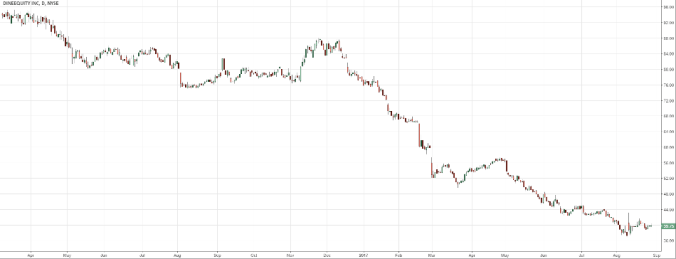
As far as “The Neighborhood” is concerned, Applebee’s recently announced that they are “giving up” on Millennials. Gathering places like Applebee’s, TGI Friday’s, Chili’s, etc. have done a great job through their existence in understanding people’s tastes, both for food and pricing, and successfully drawn crowds to their establishments. I even remember my daughter calling out TGI Friday’s when they changed the recipe for macaroni and cheese. I guess she wasn’t the only one…they went back to the original not soon after. What that demonstrates is that these restaurants had a willingness and ability to listen to their customers and act based on opinions and trends.

I don’t believe they’ve lost that willingness. Listening to your customers is not a new recipe for success. It’s been tested and proven over time. So what’s the problem at Applebee’s? Well, that’s where we begin tying this together.

DIN resize

Amazon has changed our shopping habits. No one wants to leave home if they don’t have to…like going to Applebee’s for dinner or ordering in via seamless.com. And when it comes to books, where it all started, or virtually any other consumer item, we find it, buy it, and review it on Amazon. Amazon (Jeff Bezos) figured out where we’d end up and decided to help us get there, while becoming a behemoth of a company. It was an extremely long term vision…Extremely. That’s not what family restaurants have done. They do what they did with the macaroni and cheese at Friday’s. They sense small changes in the moment or not far ahead of it and react to beat or at least meet the new demand trend.

And malls? Talk of the not too distant demise has risen with Amazon’s stock price, and is now undeniable (unlike global warming?). We don’t need to move from our chairs anymore to shop. So why bother? Add Amazon Prime to the mix and returns are not any tougher than shopping at the mall either. And now we can add Whole Foods to the equation. “Whole Paycheck” is how the chain has been affectionately known. But that’s not what Amazon does. They do what they just started doing on Day 1. They make parts of life less expensive and more convenient. Now you can get Whole Foods quality at an affordable price. Sounds like a successful model to me. I can’t wait to buy some avocados at a reasonable price in time for Labor Day weekend guacamole.

AMZN resize

The point here is that if we look at these companies as just stocks, we may do well on an individual basis, but you’ll do much better if you look to macro and behavioral aspects as well. It’s the same as the advice I give on using charts in general. Whatever time period you’re analyzing for your own decisions, look at a chart that is one level of time above as well, i.e. if you analyze hourly charts, look at a daily – if you analyze daily charts, look at a weekly, etc. It gives an idea of the overall tide, not just the last couple of waves on the beach. Much more accurate when you’re deciding where put that beach chair.

We’ve connected Applebee’s and the like, with malls, Whole Foods, and Amazon. Not the first connections you might make, but all can help you make decisions on trading or investing in the respective securities. And as for time horizons? Well, if you’ve got patience, you can be Amazon and lose money for years on your way to world domination. If you’ve got patience, you’ve been long the S&P 500 for a lifetime and have done extremely well, but had to endure a couple of rather painful selloffs. I like to say that “Traders may get rich, but investors get wealthy.” So look at the big picture. Even if you can’t trade that way. At least understanding the long term horizon will keep you from becoming the next Applebee’s.

NOTE: It’s been a slow summer on my blog front but I’m looking forward to returning to a more regular schedule now that it’s school season again.

NOTE 2: I’ve been doing this for about a year now. I know that many blog’s disappear in less time. This one hasn’t because of the feedback and steady increase in readership over that period. I want to say “Thank You!” to all of you that have kept interested in my perspective, as well as to Jason for all the proof reading and pre-publish feedback. I hope you have all managed to find the value in listening carefully to other’s opinions even when you disagree, since those ‘others’ are the sellers every time you buy, and the buyers every time you sell! Looking forward to year 2…


I See…OH!

“What’s an ICO?” It’s in quotes because it’s a mom question. And when the mom questions start, it’s definitely time for a blog entry. What I mean by this is that once my mom starts wondering about it and actually paying attention, I have to figure a topic has reached critical mass. It happened earlier this year when I decided it was time to blog about bitcoin. Hasn’t taken long for that conversation to evolve into a discussion about ICO’s…why my mom is hearing about them, and how best to describe and opine…

I am a true believer in the use of blockchains to transform much of what we do every day when it comes to agreements, obligations, and payments. The securities and legal industries, to name only two of many, will be transformed in ways that will create new efficiencies not imagined until recently. Progress. Love progress. Embrace it, for resistance is futile. We know this. We don’t always like it, but it needs to be accepted by anyone not wanting to be left behind due to denial. So what about these new fund raisers called ICO’s? Is this progress?

An ICO is an Initial Coin Offering. Companies issue new cryptocurrency coins in exchange for established ones, generally ether of Ethereum fame. So we use one cryptocurrency to help a company create another? Why? Because the company is looking to raise capital. By taking in ether, they have raised a liquid asset and issued an illiquid one. And who is doing this? Companies involved in blockchain technology as a way to accomplish ‘something.’ And it is that ‘something’ that the investors are betting on. A new use of blockchains to solve a problem by a company that understands how to conquer that problem in a way no one else has…maybe.

This is where we come to the first issue I have with ICO’s. What are you actually buying? A well designed, heavily tested, oversubscribed technology that can be put into use tomorrow? Well, maybe…or maybe not. When I was first introduced to blockchains and bitcoin, I was told that it was a realm for “kids with code.” This was the description of the faces behind much of the innovation that was going on. Smart visionary developers that understood answers to problems most of us don’t even realize or acknowledge exist. Better mousetraps when the old ones seemed to be working fine. But business sense and experience? Not so much.

This was and is a problem. For me, it was an immediately apparent problem as I sought with a small group to buy ASIC based computers to mine bitcoin. There were a handful of companies that popped up around the same time promising the latest and greatest machines built for just that task. So we signed up. The company’s generally were low on capital and looking to create computers selling for five figures. So they set up pre-orders and took our money. And then they set about building these machines. And we waited…and waited…and waited.

Please understand, or remember if you’re better versed, bitcoins constantly get more difficult to generate and therefore constantly require more computing power. Or, it takes longer with the same computing power to mine a steady amount. So a three month delay in delivery was costly to us as ‘investors.’ And those behind the companies building these machines were not seasoned business professionals for the most part. Ownership scrambled to handle these delays. And generally any reaction was too little too late. So in that most American of exercises, they got sued. And most went out of business. I’m not sure if the founders all ended up losing the money they were able to pull out of the up-front payments and profits generated, but it definitely was not a possible scenario they planned for.

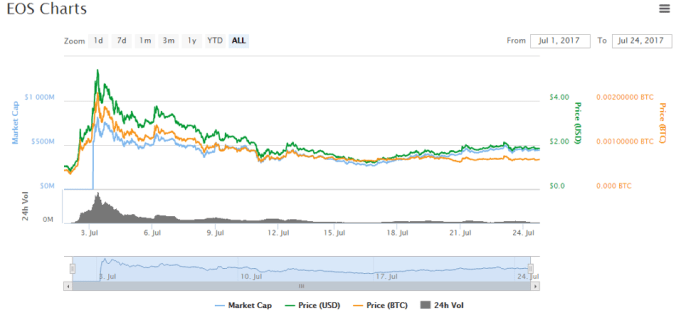
So now we have ICO’s. The latest and greatest way to fund your blockchain related startup. Proof of concept? Overrated…a simple white paper about how you’re going to change the world is really all you need. And some believers…or at least evangelists. And then you strike. Get all these dreamers to invest their crytpocoins in your new one. And the reason they do this is in the hope of investing for pennies in the next bitcoin. Or even Ethereum. Insane growth not available in more traditional market offerings. One of the recent ICO’s was for EOS. One of the things that’s interesting about this one is that the founders stated in writing that the EOS coins being bought had no real use in the EOS application itself. In other words, you really bought nothing of value. But you did help a handful of people raise a couple of hundred million dollars. The EOS coins ran up to over $4 and now “trade” just under $2…for really nothing.

EOS

This ICO thing begins to sound more and more like traditional investments…actually more traditional investment scams, schemes, or some other unflattering word. Pump and dump scenarios have been attacked by our regulators for years. And that raises another interesting trait of these ICO’s. Many of them are intentionally closed to US investors, and if the issuer notes that your IP address is US based, you can’t apply to participate. It could just be me, but if these things were so legitimate (“legit” being one of the more overused terms these days) I’m sure the smart people behind them would want to welcome US investors.

I’m sure that this new funding mechanism called an ICO can have some benefit. But it seems like a bigger time Kickstarter without the product at the end that you can hold and use. Don’t get me wrong. There are definitely people making money on these. But like the legal IPO’ s of the late nineties where favors were called in to get initial share allocations, all the way through pump and dumps and real Ponzi schemes, the ones getting rich aren’t the small investor taking a shot at instant profits or riches. No, as usual, those are the people that will most likely end up on the wrong side of the trade.

What’s That Crashing Noise?

Attention spans get shorter and shorter it seems. The 24 hour news cycle seems to have gotten whittled down to a 24 minute news cycle. Once in a while though, a story has a great deal of impact and is referred to as an example of ‘something’ over the long term. This goes back in my memory to at least Watergate. Think about it. The scandal that enveloped the Nixon administration and led to his resignation is known by the name of a hotel in Washington D.C. at the time. The Watergate Break-In is now just “Watergate” and refers to more than just a break-in. There’s a plethora of ‘gates’ after that one, even deflate-gate when the entire football world was in a tizzy over a couple of psi of air in a ball.

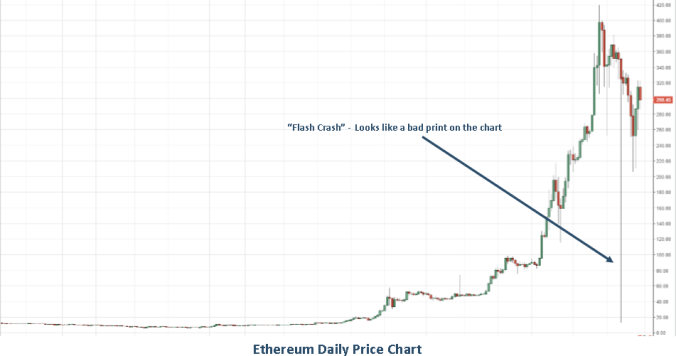
Now in the markets we’ve had ‘crashes’ since 1929. And more recently, we’ve had “Flash Crash” added to the lexicon. It was just used again in the Ethereum market, so I guess now flash crash is up there with anything “-gate.” And as soon as it happened the cry was this is the end of the Ethereum market and all the other crypto-currencies with it. See what a bubble it was? Etc, etc…

Ethereum with text

Ethereum is working its way back up. And any flash crash is immediately followed by a bounce as violent as the drop. I guess that’s part of the definition, though since it’s a new phrase still finding its footing, that part may still be up for interpretation. The fact that we are applying a newly accepted term like flash crash implies, to me at least, that the market in question is not “over.” When there was a crash in 1929, I don’t think that people were immediately terming it that. “End of the stock market” is probably closer to what was thought at the time. The term crash would have been a more hind sighted expression. After the dust settled. No doubt before the market recovered, but probably not a coined phrase the next day either.

When it happened in 1987, “crash” was the term used to compare the two events. And when the “flash crash” happened in Ethereum last week, the expression was used to compare it to the flash crash in equities in 2010. Hind sight. We’ve seen this before. All of those equity indices are still around. Thriving, even. It wasn’t the end of the stock market back then, it’s not the end of Ethereum now. These markets find a bid. Buyers emerge. That means that the markets in question will continue as there are still people that think there is value to be had.

This move in Ethereum (and in turn other crypto-currencies) was actually a pleasant “coincidence” of timing in my mind. Now the move itself was attributed to a “multi-million dollar” sell order hitting the market all at once. A “fat finger” order was one of the suspected causes, i.e. someone putting in an order larger than they intended. Like with an extra 0 on the end of an order…Selling 10,000 instead of 1,000 is a prime example. Maybe that is what happened. Fat finger is another term that was invented for errors or occurrences in our standard, regulated markets…and the fact that we recognize the expression means it was not a one-time only event.

The pleasant coincidence is that the market needed a catalyst for a large correction. Not that large, but the fact that it has not fully regained the lost ground means it definitely had a real impact. Whew! Needed that. The last couple of week’s financial news has had an amazing number of mentions and articles about the run-up in Bitcoin and Ethereum. Everyone wants to get in on this get rich quick trade. No downside. Like buying NASDAQ stocks in 1999. And people call them bubbles along the way. But the money chasing easy money pours in anyway. And then much of it vanishes. People gambling and losing money because they never thought they’d lose the money.

So the “weak longs,” as they’re often known, get into the market and quickly chased out. They are not buying Bitcoin or Ethereum with any long term opinion. In fact, many don’t even know what they are buying. But if other people were making quick money, they wanted in. And got what they deserved. Cruel? Don’t kick someone when they’re down? Well, none of this is easy. It’s not supposed to be. Buying a parabolic move in anything generally skews the risk to a level not worth trading. And if you do buy one of those moves, it should always be with an understanding that reversals happen quickly and violently in such markets, so buy for the long term or not at all…and be prepared for some pain.

The point I’m making is that crypto-currency markets are much like other markets. Young ones are very thinly traded, people get rich or go broke in short periods, and the moves they make are the same ones made by traditional instruments when they were newer to market. The idea of regulated markets would do much to change the trading of these instruments. I believe it would quell a fair amount of the volatility they experience, like an old pink sheet stock becoming listed on an exchange. In the end they will trade as instruments across all asset classes find a way to trade from time to time. Unpredictably. Charts or fundamentals, unpredictability is what happens at some point and drives prices in ways we can’t believe have ever happened before. Until we remember that there was even a name invented for it one of those times it did.

What Do You Really Think?

As we’ve gone through these ‘chapters’ I’ve avoided the elephant in the room. That elephant is Washington D.C. Almost as much drama as a 15 year old daughter. And yet we make new highs in equity indices like it’s all sunshine and roses. And the VIX?…Oh, the VIX. How low can you go?

I’ve been trying to figure it all out. This is not to pass judgement on anyone or anything. Just trying to figure out how the television, internet, and those remnants of days gone by, newspapers, are dominated by tweets, hearings, interviews and the like coming out of the Presidential administration with no large reaction in the markets. I think we can all agree that this does get in the way of doing business when it comes to Congress and the future of our country. Yet the markets all but ignore it.

There are reasons to be wary. Not because anything wrong has definitely happened. But remember, the price of securities is driven by perception. And the perception seems to be that there is this huge distraction sucking our attention away. The rhetoric is continuous. So how does this all get ignored? I’ve come up with a theory, and that is all it is. But if what we focus on when analyzing price is what is going to happen in the future, than it stands to reason that the overall market is driven by this focus on a broad basis.

So there are a couple of possibilities. One is that the storm will pass and soon the focus will go back to things that drive the country and in turn the market. That sooner than later, we will be talking only about infrastructure and tax cuts. And that is an optimistic thought that I think we’d all like to subscribe to. I know I would. Those are the things that truly interest me when it comes to analysis and making sense of the charts (The stories behind the pictures).

In addition to the VIX constantly going lower and the markets in turn going higher (doesn’t really matter which is the dog and which is the tail), gold is not in a huge rally. It’s in a small rally, we’ve made multi-week highs, but it certainly isn’t reflecting a large flight to quality, or flight to security. It’s actually in the middle of a multi-year range. Ten year notes? Rallying as well. This can be perceived as a small flight to quality like the gold market, or it can be looked at as a reflection that the economy may not have as much steam as we thought a couple of months ago.

Gold cropped w Fibs

I do think it’s positive the way the markets are shrugging off the drama. But I still find it to be a bit confusing. And this is what leads me to my theory. I’m interested in what others think. Remember, the markets move on crowd opinion and perception, and you’ve read here before that it’s always good to know what the competition is thinking. Sometimes these thoughts are somewhat subconscious, but that doesn’t detract from the influence on our investment and trading decisions. This is more about investment than trading, as trading is a short term perspective in my opinion, but investing is based on what’s going to happen over a longer horizon.

So what’s my explanation? Well, I don’t know that it’s an explanation as much as another possibility that I know has been brought up by a few and generally just fades into the background. Are the markets pricing in the expectation that before too long our president’s last name will be Pence? Boom. Said it. Not wishing it necessarily but putting it out there as a possible explanation of why there is not more of a reflection of the drama among our country’s leaders.

Let’s examine what’s going on in Washington compared to the most dramatic time in the presidency in my memory, as well as many others. Nixon. Watergate. There were of course more factors at the time than that. There was an oil crisis. Lines at the gas pumps. This truly interfered with our ability to function in our usual manner. And the markets reflected all of this. Investor confidence plummeted. The stock market went down from soon after Watergate news hit. Those results cannot only be attributed to waiting in line to fill the tank.

Today, we also have other factors at work. It’s becoming a scary world. Terrorist attacks make the news more and more often. Worse than figuring out if it was an odd or even day for gasoline. And the market goes up. And the VIX goes down. Confidence doesn’t seem to be an issue. Are we all just acting like kids? “La, la, la, I can’t hear you?” I don’t think so. I honestly believe that there is the possibility we’re pricing in a change in the White House before 2020 or 2024.

Donald Trump is a wild card. We’ve not seen a President like this. We’re accustomed to career politicians. And whether or not you agree with any single politician’s opinions on issues, let alone the major party agendas, they are predictable based on their history. Donald Trump is not predictable. This we can all agree on. But Mike Pence is. There is a certain calm in society when we debate only issues. Right/left, the lines are relatively well defined. And this leads to a bit of stability. Even in bear markets, we have a reasonable opinion of what will happen tomorrow based on our leadership. And if indeed we are pricing in a Pence presidency, that predictability, that stability, both return. Agree with him or not, none of his tweets would be fodder for the types of reactions on both sides of the isle that we have now, if he would tweet at all from the oval office.

I’m not here to advocate for this result. I already stated that I don’t want to judge or bring my opinion of the drama into it. I just want you to think about what’s truly behind your decisions, and those of all the other people faced with the same question…am I bullish or bearish and why. This is quite the rally we’re in. And despite the contrarians, there is an extreme erosion of a volatility index. So don’t completely discount the theory without contemplating it. Because if what others are thinking is indeed part of the decision process, some people are thinking the same way I am.

What Goes Up Doesn’t Always Come Right Back Down

Value. Worth. Two words constantly used when espousing how much something should cost. Be it a fidget spinner for $5 (undervalued!) or Tesla stock. And we seem to hear a lot about what things are worth, especially when indexes and stocks have been having such a bull run. I pointed out in a recent blog about the price of bitcoin (which was written a couple of months ago with bitcoin at half(!) its current price) that things are ‘worth’ what someone will pay for them.

What we need to understand from this is what’s been written by many including me before; the market is always right. Over the years, this cliché has served me well. I repeat it like a meditation mantra when a position is against me and I’m convinced it shouldn’t be. Not quite as quick to say as “Ohm” but definitely more useful to me through the years. We keep getting told the S&P, Dow, and any other broad index you can name is “too high” and will need to go down soon. Why? Well, the reasoning is that these things are overvalued. And we’re told the same for individual stocks. A favorite these days? Tesla.

This is a very popular refrain recently. Heck, even Elon Musk said so a few days ago! This comes just a month and a half after he defended the price. What’s changed? Well, Tesla stock has gone up further since then, but so has the broader market. In the specific case of Elon Musk’s change of mind, it may just come from the fact that he can’t fully explain what’s up with the stock price either. That’s ok. He’s Elon Musk and is probably thinking about more important things. More important even than an upcoming model that many analysts say holds the key to the future of the stock price…unless it doesn’t…

He’s probably spending time thinking about solar power from roof shingles, larger and better batteries for storing power, and a bunch of things involving rockets and space. We can excuse him if the stock price is not the most important thing on his mind. And that’s good. Too many CEO’s survive or get fired based on stock price. People like Elon Musk and Jeff Bezos don’t worry so much about that. They’re busy changing the world.

But what about those analysts that say it can’t maintain this upward move. Same thing we’ve heard about the stock for years. Just Google “Tesla Stock Overvalued.” 2017. 2016. 2014. People want to be contrarians, and many an analyst has made a name, and a career, by making one of those “This is the top” calls and being right. It only takes being right once, as long as it’s loud and very right. The incorrect calls get lost amongst all the other incorrect calls that are constantly made. As a contrarian at heart, I often want to do the same. Thank goodness for charts to keep me honest…and let me know that I, like many others, am just not smarter than the overall market.

Being a contrarian is what can lead to that one correct opinion that makes you famous. It can also lose you a lot of money before and after. The broad indexes have experienced this recently. And the story that illustrates that even better recently is the VIX Index. The “Fear Index.” It’s trading at extremely low levels, and recently reached its lowest in decades. Even with the drama in Washington, it only picked its head up briefly. Now back down it’s gone. Kind of odd when you think about it. But that’s value. It’s worth what people pay. And it’s worth less the higher the stock market goes.

VIX and SPX

That’s the way this one works. Negative correlation to stock prices. Look at the chart. It’s more of a mirror than a Rorschach picture. The volatility has left the building, and no one is expecting it back anytime soon. Except the ‘professionals’ that keep saying something has to happen. Why does something have to happen? Because the crowd has to be wrong. We can go into contrarian views more deeply another time, but really, it’s semantics to me. The crowd is right a lot longer than they’re wrong. And the crowd is what drives the market. Not the professionals. A bit counterintuitive, but so are investments many times.

So what’s the point? The point I’m trying to make is that we can’t always determine what or why. We just need to understand that all we’re really getting are opinions and giving people the opportunity for face time on TV. Or supporting their careers, waiting for those one or two ‘amazing’ calls amidst all the noise they produce. I’m not completely discounting the professional analysts. They do provide a great deal of information to help us make our own decisions. It’s just that oftentimes they’re blinded by their own “intelligence.” We need to always remember that we’re not trading or investing to be right. We’re doing it to make money.

Markets in general and stock prices more specifically are driven by the rest of us. And if we think that Elon Musk can change the world in measurable ways, which I obviously do, then we invest in the person as much as the company. Amazon lost money for years. And the stock steadily went up. Thankfully I never shorted it on the way. But I sure did want to! Because I was trying to analyze too much. And I didn’t necessarily see the bigger picture of what Jeff Bezos was doing. I’ve never wanted to short Tesla. Because that would be like shorting Elon Musk. And to me, Tesla’s “value” is Elon Musk. And I’m a big fan.

Unfortunately, that’s not something professional analysts focus on. They focus on car sales. They focus on current and upcoming competition in the electric car space. They say since something hasn’t been done before it can’t be done now. And the VIX? Where does that fit in here? Well, it does and it doesn’t. There is no Elon Musk behind the VIX. But there are a lot of professionals telling us why the price is wrong. And why it has to adjust. Me? I’m smart enough to know I’m not that smart. I just watch, wait for a sign from the VIX itself, and then I’ll act. Based on the market. Not my opinion. Not my ego. I leave those mistakes to the professionals.


Risk On, Risk On

Trading Places 2

I like risk. I’ve spent the greater part of my adult life taking risk. I stood in the futures pits of the COMEX and NYMEX for almost 14 years. Must be something about risk that kept me coming back…Oh yeah, the reward part of the saying. Risk/Reward. It seems simple. But it’s difficult to comprehend sometimes what real risk can feel like at any given moment. The government and the brokerage houses have a great deal to rules to address this. Certain instruments are only available to specific investor classes deemed able to accept it.

There are a few ways to become able to trade or invest in these instruments and methods. One is to be rich. When you’re rich, or at least rich as deemed by a government guideline, you can pretty much do whatever you want. And that seems fair. First of all, chances are you can afford to lose some money. Also, there’s a good chance you’ve done something or some things in an intelligent enough manner, financially speaking, to understand the downside. Or maybe you were lucky enough to be born rich, and we figure somewhere along the line it was all explained by the elder generation.

You can take tests. Series this, series that, CFA, etc. There are lots of industry tests. And passing these tests implies at least that you have an understanding of what can go right, and more importantly what can go wrong with different investment vehicles. So once you pass a test saying you can help others to make money in your chosen discipline, it’s often ‘assumed’ that you understand it for your own purposes as well.

Experience. The more experience you have with financial investing and trading, the more the portfolio of allowable products may grow. If you survived one level, you get to play, I mean move on to the next level. Seems logical. Not all of these approaches open every door. But they all open some, as far as what you can buy and sell, or invest in. We generally start out with basic equities, move on to margin trading, options, from simple strategies to being given a longer leash and being able to try more risky strategies. Maybe this is how video games were designed. Games following life, but with no real risk involved, just the risk of some silly music playing as your character is killed.

I’ve mentioned my background as a futures trader in the COMEX and NYMEX pits. It was funny when I applied for a stock account after trading futures for my own account for a couple of years. I was told I was approved for everything. I guess the risk of the pit, every single day, gives you some ‘street cred’, as it were. So for me, risk is fine. In fact, I have often referred to the fixed income part of our industry as akin to watching paint dry due to less risk…for the most part. But that’s just for me. And fixed income has made a lot of people a lot of money. So I’m not knocking the profit side of the equation on that one. It just isn’t the same as the world of futures and the leverage afforded those participating in that part of the industry.

So this thing the government has about bringing us along at a reasonable rate to work our way up the risk ladder is probably one of the more logical things they’ve passed rules about. The Political Science major in me often says that one of the primary roles of government is to protect people from themselves. We don’t want to have constant bailouts for every person that didn’t understand the risk involved in getting short natural gas futures when there’s a hurricane on its way. Or any other similar trade.

Then I read this article. The SEC on Tuesday approved a request to trade quadruple leveraged exchange-traded funds, ETF’s. Those initially approved seek to make four times the daily performance of the S&P 500, either up or down. And the symbols? Up and Down, of course. Cute. Trading is many things, cute is not supposed to be one of them. But that’s marketing. And speaking of marketing, how are ETF’s listed and marketed? As equities. And since ETF’s are equities, just past that first video game level is using margin on equities. We just increased the leverage. So when I saw the article yesterday, it was a “Wait…What?” moment of sizeable proportion.

As a kid we were all told at some point, “Sure it’s fun, until someone gets an eye poked out,” or at least a similar phrase. And that’s how I feel about these new ETF’s. They’re going to be fun for people while the market trades with some semblance of normalcy. It will go up. It will go down. People will get addicted to the comparatively outsized returns available with that type of leverage. Until…

Now this isn’t to say that the market is going to crash anytime soon. But with that kind of leverage it doesn’t have to when you’re wrong. We can short them too…this is really starting to sound a bit more risky than buying shares of McDonalds. But that’s ok. Go ahead. What could happen? Everyone understands the risk involved. Oh wait, we’ve already decided that many of the people trading equities don’t fully comprehend the level of risk involved in many types other of trading. We actually learned that when the NASDAQ bubble burst.

What if the market does crash? It’s happened. More than once. And I know that one of the toughest things for a trader or investor is to admit they’re wrong and get out. Remember the blog about finding your nearest exit? That’s what I’m worried about. Crashes happen to the degree they do because they feed on themselves. No one wants to get out…until everyone wants to get out. But I’m a fan of risk, though maybe I should say understood risk. And I’m even a fan of giving people access to taking a shot on things beyond basic corporate ownership in the form of shares. But in this case, I’m not sure the government is really doing a good enough job of protecting people from themselves.

For the professionals, there are futures contracts on the S&P. Plenty of risk for those qualified. There are single and double and even triple levered ETF’s to trade the indexes. Seems like we’ve got to be far enough down the road by this point. Do we really need to narrow the gap between the most and least risky instruments that much? Does everybody have to have access to outsized risk? Like so many other things in the world of investment instruments, I believe we should be careful what we ask for. Before we get it.


You May Not Want to Fly Them, But You Do Want to Chart Them

As we are all very much aware, on April 9th a passenger was forcibly removed from a United Airlines flight, and faster than that plane can fly, the video had already traveled globally via social media. Obviously this blog is not needed to further explore that this was wrong in so many ways, and right in none. But the name of my blog is “The Story Behind the Picture,” and I do believe that this story warrants a look at that picture.

One of the biggest headlines associated with this story was the effect on the price of United stock (UAL) the day or days immediately following. So I decided that this is a good opportunity to actually look at that price action and perhaps add some perspective on what damage, if any, this news really did. After all, the outcry for boycotts and general disdain for the company as a result of this action should all have a profound effect on the stock price and overall value of the company…or so we’ve been led to believe.

And yet the picture seems to tell a different story, and my career has been spent looking at those pictures and thinking about the story for further clarification only after many of my conclusions have already been reached. So let’s look…

UAL vs SPX trimmed

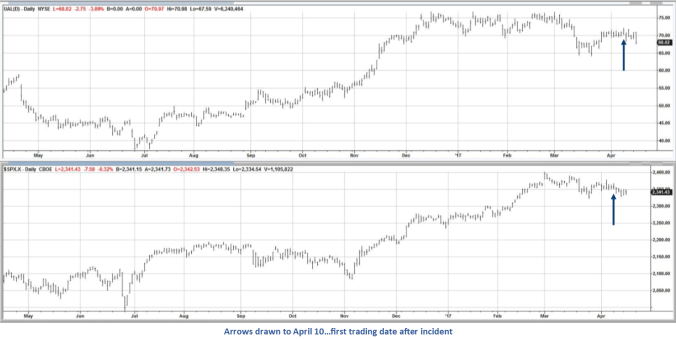
 The top chart above is United Airlines stock (UAL); the bottom is the S&P 500 index. The first day that people were able to buy and sell United stock after the incident was April 10th, the date referenced by the arrows. The charts show that these two securities have moved in a correlated manner since early March and actually over the last year at least. In fact, the correlation over the past year is 0.853, where a value of 1.00 is an indicator of completely correlated values, i.e. as one moves the other moves exactly the same. We would look at this 0.853 value as a high correlation. If United’s stock had tanked in the week since this went viral, that number would certainly be lower. The correlation over just that week is even closer to 1.00 as it calculates to 0.957, though we don’t have a very large data set and that’s why I ran it for a year. As goes ‘the market’ so goes UAL.

Either way you look at it, United stock has certainly not performed poorly relative to the broader market measure. Since the 7th, the last trading day before Dr. Dao was dragged from the plane, United stock is down just over 1%. I would not look at this as an indicator that United won’t recover from this debacle. If I was a stockholder, I might even be impressed with how well the stock is holding up. So why even cover this topic if there’s so little going on? Because that’s the point. And that’s why charts are so valuable!

We live in a world of information. I would say we live in a world of TMI – Too Much Information. Especially if you are one to invest based on the fundamentals. When assessing the fundamentals in this case, an analyst would have to go beyond earnings, percentage of seats filled, cost of jet fuel, seasonality, etc. You would be hard pressed to ignore the outpouring of negative press associated with the video and story. But in the end, will it really cost the airline all that much?

There is not much of a warm fuzzy feeling around flying anymore. Forget the business formal dress attire that marked the early days. We no longer have a good feeling about much of anything when we fly. JetBlue serving up free wi-fi, a soda and a bag of chips is as good as it gets. No full meals, free or not. Blankets? Pillows? Bring your own; if you’re lucky the flight attendant can sell you one. Average height or taller? Discomfort awaits. And the cheap fares one might expect from this level of service and comfort has no correlation to what we’re getting. When Peoples Express was created and began our fare wars, at least we knew with them that we were getting what we comparatively paid for. Not anymore.

Flights are packed. All the time. So the risk of United losing many passengers is actually pretty low. There aren’t a lot of other places to go. Fewer airlines and fewer flights translate in the real world to book whatever you can get. Spring break is one or two weeks. We all need the flights at the same time. Whether it’s JetBlue or United, most of us will choose the least expensive at a somewhat convenient time. And if that’s United, then United it is. Same price, same time? Sure, I’ll choose someone different. But I rarely get that luxury.

And all of this information is contained in the top chart of UAL stock price. Per the chart, this is not a big breakdown. There has not been a mass exodus of stockholders, and those that chose to sell based on the news, the fundamentals, may very well buy their shares back soon. They certainly aren’t looking in the rear-view mirror declaring victory. The consumer? Even less victorious. Because while United has changed some policies based on what happened, our personal flying experiences will not improve all that noticeably. So what seemed to be extremely impactful news is really more of a snooze.

Don’t take my word for it, look at the chart. Numbers don’t lie, as the saying goes. And all of our negative sentiment is reflected in the price move, or lack thereof. So listen to the news, check your Twitter feeds. Find out The Story Behind The Picture. But don’t lose sight of the picture when doing it, because your best information is right in front of you; and as mentioned in a previous blog, you don’t need a business degree to interpret it.

Whose (de)Fault Is It? Cars, students, and countries.

As I was looking for a topic to write about, I was struck by the articles I’ve read over the last few weeks pertaining to debt. In many ways, debt is good. We buy houses using mortgages and for many it is the equity they build over the years that helps fund retirement later in life. Student loans are there to help us have a more educated workforce. Auto loans move inventory, and in the years of shorter vehicle life spans, kept us all on the roads. Countries borrow, of course. Our own bond market is one of the largest trading markets in the world.

Debt is good. But only if managed properly. The mortgage crisis is beginning to fade into our memories a bit. The pain endured by so many is no longer at the forefront. When the crisis hit, we all thought about that pain. Now only the people still left with underwater home values or other continuing negative circumstances directly attributable to that crisis think about it regularly. And what happened to cause that crisis. Everyone got loans, the money flowed easily. Rates were not high by historic standards. Builders built. And built. And built.

Good thing that’s a distant memory. Won’t make that mistake again, right? Hmmmm…Car sales figures come out this week. We’ll start there. I hope the numbers are good. We need continuing signs of economic strength. We have a record breaking rally underway that no matter your opinion of the causes, none of us is wishing for a crash. Well, a few maybe, but they’re just talking their positions, so to speak.

But the auto industry may not be so healthy no matter the sales figures. The level of car debt has been getting a great deal of press. That press is not positive. And a look at the chart shows no “Record Breaking Rally” going on in that industry.

Auto stocks v SPX with commentThe number of people delinquent on car loans is at a high. Subprime auto loans have exploded, and delinquency rates on those loans as calculated by Morgan Stanley Research is over 4.5%, and close to the level reached during the financial crisis. While not near the cost of a home loan default on the economy, cars are one of the larger purchases most people make.

When we look at the impact of debt on our economy, both directly and indirectly, we can’t discount student debt in the equation. In fact, I believe we should be paying much more attention. Remember unlike car loans, most student debt is government backed. Some people are paying attention. Like those betting against our expansion of home debt a decade ago, there are fund managers betting against the student loan levels (dare I use the word “bubble?”).

Michael Burry was featured in the Michael Lewis book “The Big Short.” John Paulson also made billions from that mortgage move. But like the mortgage crisis, there are not a lot of people outside of a few fund managers that are going to see a big benefit if this is a bubble that bursts. And how does it get handled? How much more money can the government print for bailouts? The housing crisis bailout was pegged at $700 billion. We were in the Trillions with a “T” if you count emergency lending. That’s a lot of bailout. We could have bailed out virtually all student debt at the time with the same amount. But it was the banks, not the students that were too big to fail.

Like housing debt, there are large implications of student debt. The effect of these loans built from educations that can easily cost $250 thousand, yes a quarter of a million dollars for college(!) is something that weighs on an entire generation. And while we have not seen much inflation to speak of the last few years, the cost of college education has not stopped going up. Since the financial crisis, student loan debt in the government portfolio has increased over 100% since 2008, from under $600 million to almost $1.3 trillion, per the US Department of Education. We are at well over a trillion dollars. And delinquency rates are over 10%. This is not a pretty picture. We’ve already forgotten we started the blog with car loans…

So let’s move on to the last part of the title…countries. Makes you cringe just thinking about it. Venezuela’s economy is collapsing, but we don’t pay too much attention it seems. We watched the Greek economy pretty much do the same. The Pound has taken a bit of a pounding to say the least, based on Brexit. Now there’s talk in France by the far-right National Front Party of exiting the Euro. This is not simply like Great Britain exiting the European Union and whatever downstream effects that will have. This is exiting the Euro, the currency. And while not probable, we’ve seen some improbable stuff lately.

This would have far reaching impact and could easily disrupt the stability of the EU overall. France’s exit and its exiting the Euro currency would be viewed as a default on the country’s debt, according to Moritz Kraemer, head of S&P’s sovereign ratings. With or without that Frexit, France is at the top of many lists for the next economy to watch for possible collapse. The last couple of years have brought a number of impossible events into the world of possible.

I have little worry about the US economy collapsing. We’ve already dealt with “Too big to fail,” and seem to be coming out the other side intact. We’ve started raising rates. A good sign in a couple of ways. It signals expansion has seemingly taken hold. It also ‘should’ help curb some of that borrowing. But there is a lot of debt already in existence. And much of the larger debt, including education and cars, is in shaky shape. Debt is a double edge sword of the sharpest kind. Again, the US dollar and economy collapsing? Not anytime soon. Impossible? I for one have stopped saying anything is impossible. From easy space travel becoming a reality, to first world countries collapsing, it’s all possible.

And we are all to blame. We love debt. It’s addictive. Especially at low rates as we’ve enjoyed for more than just a few years now. Remember, debt is like a trading position. Properly managed debt is good. Improperly managed debt will break you. So keep an eye on the numbers. Keep an ear out for the possible solutions. But all the while, don’t ignore macro factors that you don’t think will affect your micro investing. We’ve created a world of economic influence where all of this matters. A Lot.

Man Smart, Woman Smarter

20120913_glass_ceiling

That’s the title of a song made famous by Harry Belafonte on his Calypso album released in 1956. I became well acquainted with it after hearing it at countless Grateful Dead shows in the 1980’s and 1990’s. The song popped into my head last week when I read an article about a study done on the different success rates of male and female traders. The study was conducted by Professor Peter Swan of the University of South Wales, working with researchers Joakim Westerholm and Wei Lu.

Unlike a trader study that I mentioned in a previous blog entry that drew conclusions from a sample size of 18 traders, this was a study of almost 1 million traders in Finland over a 17 year period. Those numbers definitely add a sense of validity to the results. And the results were that women make the better traders.

I’m not sure if the results were released to nearly coincide with International Women’s Day, but it certainly was a good coincidence if not. With a 15 year old daughter in the house, the confluence of these two things made me pay attention. Being a male former trader, I couldn’t help but be drawn in. This is not the first study to draw this conclusion, but it is probably the broadest in the sense of sample size and time. So let’s examine….

According to the results, the women outperformed the men across the board. One conclusion was that the women traded more as contrarians then men. This style makes sense as very often the most profitable trades are also the hardest to make. Selling a security, in this case stocks, as it’s running to its highs, or buying as momentum drives it lower is very counterintuitive to me. I trade momentum. Buy a new high, short a new low. The women didn’t peg those absolute highs and lows, so they did experience some short-term losses. But they held those positions and beat the men across the board.

Why? A few reasons mentioned as well as some of my own conclusions. They traded less. The females seemed to zero in on the best stocks to buy or sell. They didn’t just trade to trade. The author mentions that they didn’t diversify as much. They had their targets and stuck to them. The women also profited more when using their own funds in a personal portfolio. I would conclude that this is because they were better able to choose exactly what they wanted to trade whereas an institutional trader is often handed a “universe” to watch and trade. This was an additional indicator of the better focus of the women over all.

Having traded in futures pits as well as within a “prop-trading” firm, I was usually surrounded by men. There is no doubt that historically males have dominated our trading venues as well as the industry as a whole. And it makes you think how much better the industry would have performed if this study’s results could somehow have been available decades ago. No doubt there would be fewer glass ceilings remaining that still need to be shattered.

The futures pits were easily over 95% male. We justified it as it was too physical for those delicate women to endure. It was also an environment that as a dad, I would not want my own daughter to have to exist in. Upstairs, the trading desks were much the same. Not so physical, but almost as chauvinistic and crude. The industry at that time carried the unequal treatment of women as far as it could, and always found some sort of justification. This study just makes us look dumb, for if our true intent was to just make money, we should have invited and embraced women sooner to accomplish that objective.

It seems from the study that women had patience the men did not possess. They held fewer positions and held them longer. The machismo of the trading pits was not there. The need to prove something to others in the pit or on the desk or anywhere else probably was not a part of decision making. The ability to stick to the singular goal of a positive P&L over the long term was the driver. It’s interesting as men often try to brag about buying the low and selling the high, yet the women came closer to doing just that over time than the men in the study. We (males) talk a big game, the women just win.

I also realized that the one place I have been able to accomplish more of what the women did, that is zeroing in on the correct position to take and letting it ride to long term profit, has been in my researching, testing and implementing of automated trading models and strategies. And this makes sense. The women did better analysis. They had patience and the good sense to only trade the best opportunities. Emotion was not the driver of their decisions at any point, just like my computer models.

This is what optimizing and testing trading ideas is all about as well. Don’t be driven by emotions. Analyze actual test results and listen to them in order to improve the strategy over time. Don’t get out of the trade just because there’s a profit. Get out because the research has led to a successful exit strategy. Trade the signals. Don’t just trade. And make sure that the research that went into all these real time decisions is valid. Patience in the amount of time it takes to do proper research pays off with more successful results. It seems to me that these practices are what the women were doing in a subconscious way without the necessity for all the computer programming I’ve had to depend on.

I love this study. I learned a great deal from a very short article. It opened my eyes to why I still have the belief in well researched automated trading strategies. The research is done before the positions are ever put on. No ‘skin in the game’ to lead to emotional, and wrong, decisions. Just the ability to analyze the market in a rational way and only then act on the decisions your research has led to.

We can all learn from this study. And it encourages me that we have more proof of women having the ability to have at least as much success as men in the financial community. The females I taught and mentored while at Bloomberg were additional proof of this every day. So keep shattering those glass ceilings. Every shard on the floor brings us all closer to having more success at whatever it is we are striving to accomplish.

Pay Attention To The Man Behind The Curtain

robot-img

This week S3, a part of Amazon Web Services (AWS), had an outage that affected many large internet companies that we all use in our regular routine. Netflix, Spotify, and Pinterest to name a few, had problems related to their use of the Amazon cloud services. Things we’ve started taking for granted over just the last few years were suddenly removed from us, or at least moved slower. Amazon soon announced that this wasn’t a computer glitch, but actually human error. It wasn’t that long ago that everything on the internet moved slowly. Dial up modems have given way to high speed data movement that allows us to not only post pictures quickly and easily, but to even watch movies without a glitch in front of our computers, or with an iPad in our hands, and this has become the norm.

The use of computers in our daily routine, or for use in very critical parts of our lives, is something we not only take for granted but depend on with increasing importance and breadth. We all know that our cars will soon be self-driven, and the new wave of investment management is known as robo-investing. Not a niche, but something offered by major investment houses. And all those robo-investing actions are the result of human programming.

This trend interests me greatly, as I’ve been both an active trader as well as having back tested thousands of automated trading ideas to build robust automated strategies. I recently read a piece on LinkedIn about the lack of gray hair on trading desks across the securities industry. The trend is toward hiring young ‘quants’ and programmers to create computer models that make money by analyzing huge amounts of data and deciding what to buy or sell and when. Don’t get me wrong, I started using computers myself to do this over 20 years ago. Not as a quant, but as someone who believed a human only has the capacity to monitor a very small amount of markets or securities on their own.

So is there a problem with this? Well, let’s go back to those cars for a moment. In the 2004 movie “I, Robot” a police detective is saved in a car crash at the expense of a 12 year old girl. The robot behind this action decided whose life was more valuable. And our self-driving cars will at some point need to make just those types of decisions. But maybe that 12 year old girl that is lost in our real world was going to cure cancer, figure out space travel through worm holes. At the time of the accident she’s just a kid getting ready for the awkwardness of adolescence. Who knows? The next Bill Gates. The next Steve Jobs.

And this has what to do with your robo-investments? One more movie reference and I’ll tell you. I watched the movie “Sully” yesterday. In the movie, Tom Hanks has a line that prompted me to write this blog entry: “Everything is unprecedented until it happens for the first time.” This is not only true in our lives, it’s true in the investment world. We call them Black Swan events. In quant investments, people are using statistical analysis to find the best odds of mean reversion. The place where things are so out of whack that they have to return to normal.

This has led to major profits for those that can program this math in ways that analyzes all that data. But, it’s also led to spectacular losses. In 1998, Long Term Capital Management (LTCM) used analysis techniques developed by Myron Scholes and Robert Merton to put on large positions across security classes around the globe. These were Nobel winning smart people. And the hedge fund had outstanding returns. Until it all blew up and we the taxpayers bailed them out. Heard that before? What happened? That unprecedented event.

I’ve mentioned an early student of mine, a physics major, who was amazed at the frequency of six sigma moves in commodities. Six standard deviations away from normal market action. The standard bell curve doesn’t even go out that far. They’re generally drawn to 3 standard deviations because in statistics, that includes 99.7% of the probable outcomes.

Standard Deviation

Those points all the way to the right and left are the tails. They just don’t happen. Until they do. Like Sully noted, they happen for the first time. And this goes on with more regularity in the markets than we realize. It can be something financial like the implosion of LTCM due to a foreign currency crises. Or a political event, like Brexit or the unpredicted election of Donald Trump as President.

The point is, the programmers often don’t take this into account because it hasn’t happened…yet. Or maybe just a human mistake slips in, like this week with S3. All the computer models, even those involved in robo-investing for the average investor designed to level the playing field and supposedly take out the human factor of your chosen advisor are programmed by people.  And all of those people have human thoughts and biases that go into those models. It can’t be avoided. There are forks in the decision process that must be taken. Not like Yogi Berra, “When you come to a fork in the road, take it,” but one direction or the other. And as time goes on, the models may learn and get ‘smarter,’ but they still start somewhere, programmed by someone.

And the lack of gray hairs is what gives me pause. How many Black Swans have the programmers experienced? We can’t plan for everything, and that’s when the unplanned event usually occurs. Experience has always been of great value in the investment world. The more unexpected events an advisor or trader has lived through, the more they will take this into account in their decisions. Remember, risk/reward, in that order. And if all you’ve experienced is a bull market over the last 8 years, do you really take into account what happened at LTCM? Do you even think about the internet bubble that burst in 2000? The mortgage crisis is the most recent large Black Swan, and many of these investment and trading strategy programmers were kids. Are they thinking about auto debt risk? Student loans? Whatever might be the next event trigger.

I’m not trying to imply that automation of trading decisions doesn’t work. I had success doing it both for myself and clients. It broadens the ways you can allocate money in just recently unforeseen ways. What I am saying is be careful. Because tail events happen. There are Black Swans swimming all the time. We just need to be sure to look out for them.

You went where? You studied what?

blog-clark-diploma-2

I may not be telling you something in this blog you don’t already know. Or haven’t already heard or read. In fact, I do hope that you’ve heard this elsewhere recently. Liberal Arts lives. I grew up in the securities industry, and have met more than my share of finance majors. I can’t count how many parents I’ve spoken to that were pushing their kids towards schools with stellar reputations for the finance majors they churned out. This isn’t even the traditional, and broad, economics education of old. It is a focused, blinders on, pursuit of a degree pointing students to a very specific career path. Finance. That’s where the money was going to be, so why learn anything else. And if you wanted the best job, the thinking was, this would give you the preparation employers were looking for. Someone who could step right in and understand what they were looking at when presented with a stack of balance sheets to analyze.

I was a Political Science major. Actually at my school, Clark University, it was a Government major. I planned on being a lawyer. Midway through my freshman year I decided not to go down that road. The question became “Now what?” I was lucky enough to land a job at Bear Stearns in the Management Training Program. This allowed me to get exposure to a broad array of roles within the firm and decide which route to go down. Investment banker was the path of choice for many, but those many were primarily business and finance majors. Interestingly enough, I went on to spend 14 years in the commodity futures pits, where many of the most successful traders had never graduated from college, or even attended at all.

More recently, while at Bloomberg, I had the opportunity to speak to a group of students from my alma mater. And they were? You guessed it, finance majors. In fact, since I left, Clark added a Graduate School of Management. Go figure. This was a school known for its Psychology department, riding the coat tails of having had Sigmund Freud speak there. And students majoring in Government, Philosophy and Sociology were what the school churned out. The current business school students had no connection to this. They thought I must have been a business or finance major as well, and they were very interested in my career path.

The question I enjoyed answering the most during their visit was, “What was the most valuable thing you learned at Clark?” I answered that as a liberal arts major, Clark had taught me how to think. Not to think about the value of a security, but to think about the world around me. The world and the people around me determine the value of a security. My own approach to trading is to look at charts. I use these charts because they are displaying price, and price is the culmination of everybody else valuing a security. Many of those people are finance and business majors. I’m happy to let them interpret a balance sheet. I just need to look at the results of their analysis on the charts to make my own interpretation of future price and value.

I like to simplify things as much as possible. I explain to students when I teach that my opinion of the markets is they are large experiments in sociology. What is the crowd doing? If more people are buying the price goes up. If more people are selling, they all believe the security is overvalued and the price goes down. Having this perspective allows me to not have to try to compete with the finance majors at their game. It allows me to understand their analysis results without needing to drill down and understand all that fundamental information. That’s my game.

This isn’t to say that I have no interest in the information. After all, I named my blog “The Story Behind The Picture.” I do think it’s important to know the information. I just accept that I won’t know it all, and I definitely won’t know much of it as quickly as others. Students have heard me say many times that I take for granted that any information I have, someone else has more and had it sooner. Then those people trade, set a new price, and I try and determine whether that price indicates the probability of the security going up or down from there.

So where does the liberal arts education come in? Well, when I try and ascertain the information, I can process more than just a balance sheet, supply chain, and current regulatory influence. I can find a way to put the information in real world terms. Things that are simple to relate to, often even obvious after the fact. There are no ‘blinders’ involved. I can think about it from a political perspective, a philosophical perspective, and a sociological perspective.

What has made me smile recently are the number of news stories that are now encouraging the same. America Online (AOL), Adobe, and Paypal all had liberal arts majors among their founders. Steve Jobs was a college dropout, we all know. What many don’t know is that he dropped out of a liberal arts focused university. And that’s just tech! Many of our great pioneers of recently successful (understatement) companies, weren’t focused on tech. And many of the most successful hedge fund managers are now focusing on hiring liberal arts majors. In fact, one of my favorite young colleagues at Bloomberg, who I had the pleasure of teaching and mentoring was a Classics major. He just landed his dream job at a hedge fund. I always said, “He gets it.” They must have said the same after his interviews.

Recently Mark Cuban, who’s had a bit of success himself, said during an interview with Bloomberg that we need more liberal arts majors in the next 10 years. He spoke of perspective. One of my favorite words. My first blog entry described the Friday Wrap’s I conducted at Bloomberg. The idea was for the younger employees, most of whom were finance and business majors, to gain perspective on the markets. What makes them move. How to interpret everyday events and find a way to translate them into investment ideas.

And that’s what more and more people are realizing. That it’s not the early “blinders on” focus that matters. It’s the ability to grasp the ‘big picture.’ Look beyond some basic finance or business education training. Look outside the balance sheet and supply chain. Grasp the impact of everything around you. This is what leads to broad investing success. It exposes opportunities you might not otherwise see. It allows you to think, not just crunch some numbers in a repetitious fashion. The more you look around, the more you think, the more you learn, the more you’ll make. That’s what makes you smart, the MBA is merely some icing on the cake.